VENTURA.
001
Introduction
Client
VENTURA
Timeline
3 Weeks
Year
2025
Designing a vintage furniture marketplace that builds trust while preserving the joy of discovery
My Role: UX/UI Designer (Solo Project)
Timeline: 3-week sprint
Tools: Figma, FigJam, Photoshop, Procreate
Deliverables: Research synthesis, persona, sitemap, task flow, wireframes, hi-fi prototype
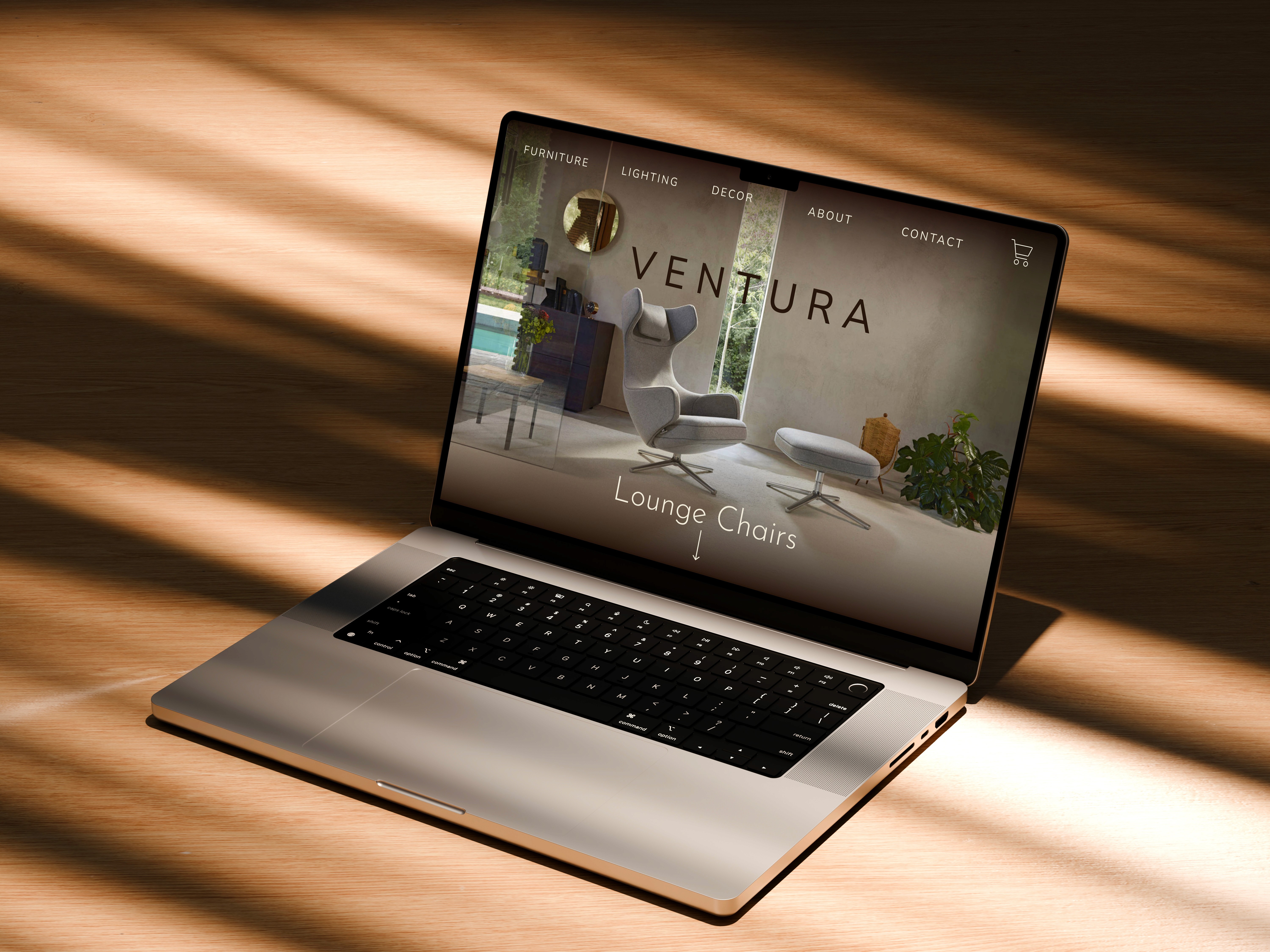

Reimagining how vintage furniture is discovered, evaluated, and purchased online.
Project Overview
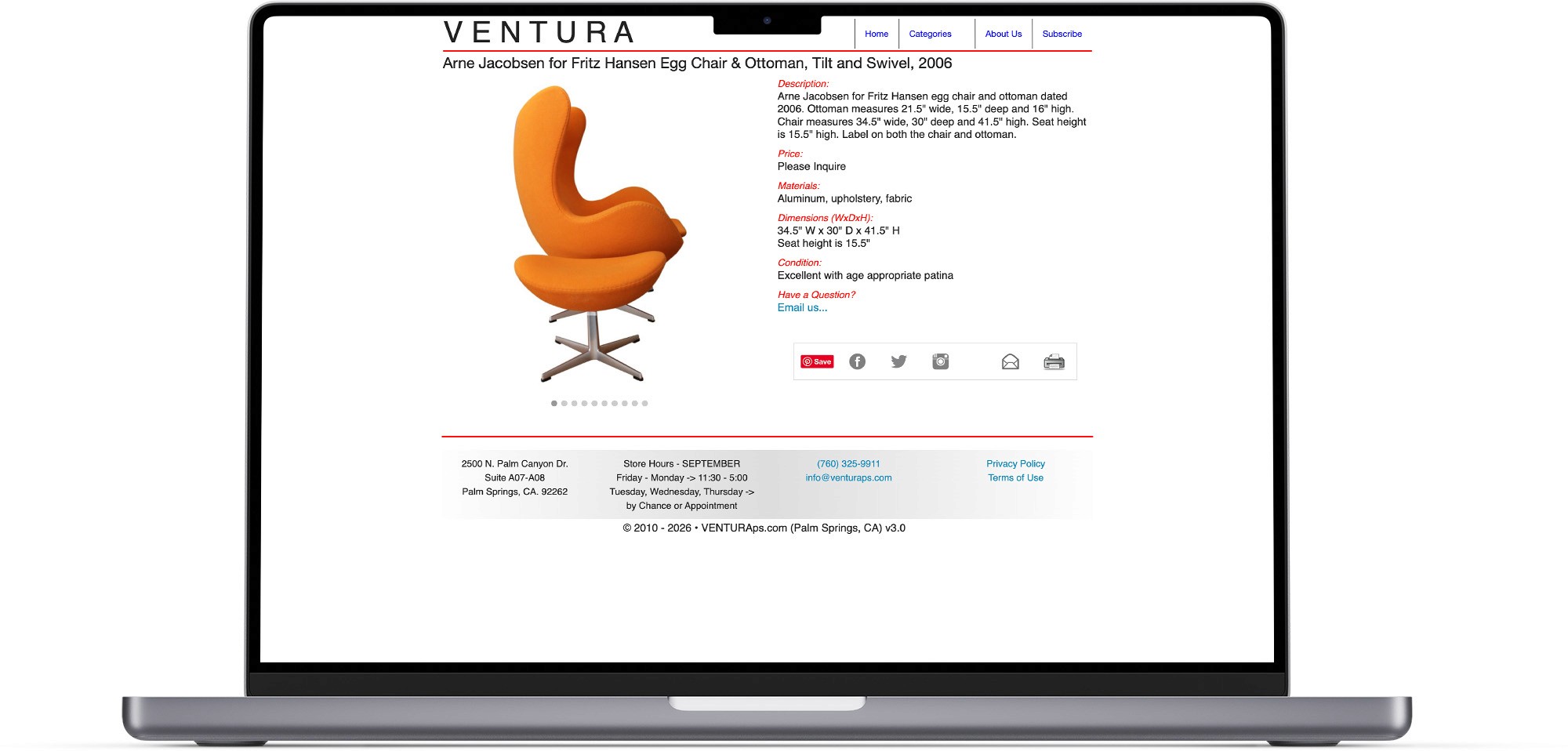
Ventura is an online marketplace for vintage and mid-century modern furniture. While the brand offered unique, desirable pieces, the digital experience fell short of capturing what makes vintage shopping special. Products often looked different online than they did in person, key information was missing or hard to find, and the experience lacked the warmth and confidence buyers associate with discovering one-of-a-kind pieces in a vintage store.
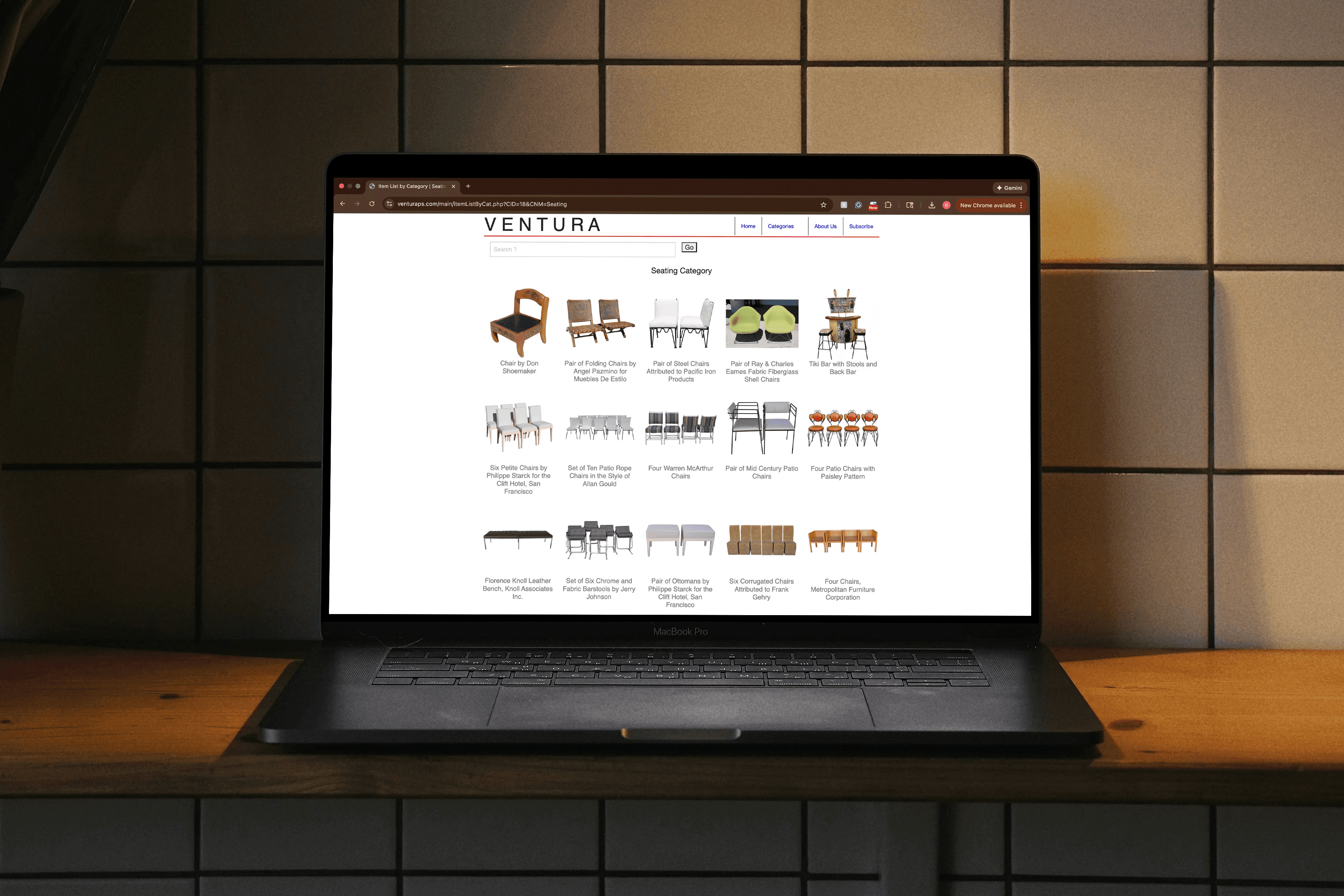
The original Ventura site featured smaller images and limited product context, making it difficult for users to assess quality and trust purchases online. An outdated visual hierarchy and cluttered layout made the experience feel bland and frustrating compared to the excitement of shopping for vintage pieces in person.
This solo project focused on reimagining Ventura’s website to create a more trustworthy, inspiring, and discovery-driven shopping experience—one that reflects the joy of finding a hidden gem while giving users confidence in what they’re buying.
002
The Challenge
The Challenge
The challenge was to reimagine Ventura’s online experience in a way that builds trust, restores confidence, and preserves the joy of discovering vintage furniture.
Background:
Ventura’s existing site struggled to translate the in-person vintage shopping experience into a digital format. Users lacked confidence when purchasing online due to missing context around quality, materials, and provenance. The experience also felt transactional rather than special, which removed the sense of discovery that makes vintage shopping exciting.
Primary Task:
The primary task I designed for was helping users confidently evaluate and purchase vintage furniture online while reigniting the sense of discovery, story, and excitement that defines in-person vintage shopping.
The redesigned experience needed to:
Build trust in product quality and authenticity
Make browsing feel inspiring rather than overwhelming
Capture the warmth, story, and excitement of discovering vintage pieces
Help users confidently choose items that feel personal to their space
003
Research & Discovery
Research & Discovery
To ground the project in real behaviors and decision-making patterns, I conducted foundational research focused on trust, discovery, and online evaluation.
User Interviews:
I conducted qualitative interviews with vintage furniture shoppers to understand how they browse, what signals build confidence, and where hesitation arises when shopping online.
“The number one thing with mid-century modern online shopping is you're just afraid that you're not going to get the quality that you would feel in the store.”
Hank (interview participant)
Competitive & Comparative Analysis
To understand how trust, quality, and discovery are communicated across furniture shopping experiences, I analyzed competitors spanning luxury vintage brick-and-mortar retail and high-end contemporary furniture brands.
Competitors Reviewed: Luxury Vintage (Brick-and-Mortar)
Hobbs Modern (San Diego)
A curated mid-century modern retailer known for high-quality vintage pieces and an in-person shopping experience centered on craftsmanship, material quality, and provenance.
Sunbeam Vintage (Palm Springs)
A Palm Springs-based vintage retailer offering a highly curated, tactile shopping experience where scale, material quality, and patina can be assessed in person. The store’s presentation reinforces the emotional value and sense of discovery that defines vintage shopping.
Competitors Reviewed: High-End Reproduction Retailers
Design Within Reach (DWR)
A modern furniture retailer emphasizing brand trust, material transparency, and polished product presentation through detailed imagery and structured product information.
Bernhardt
A high-end furniture brand focused on craftsmanship, material quality, and refined presentation, serving as a reference for how premium furniture is positioned and described online.
Analyzing these competitors helped identify how visual confidence, product storytelling, and clarity of information are established in both physical and digital environments.
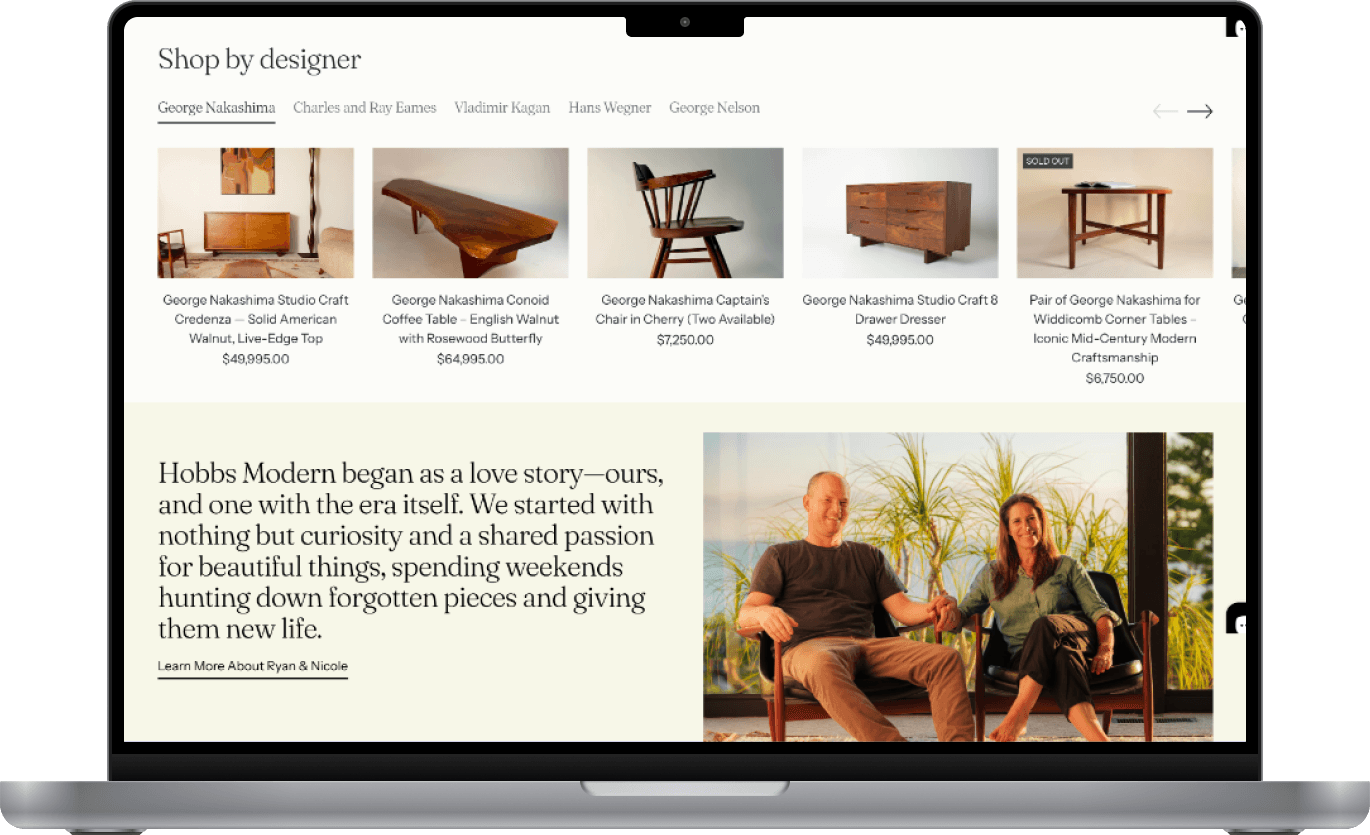
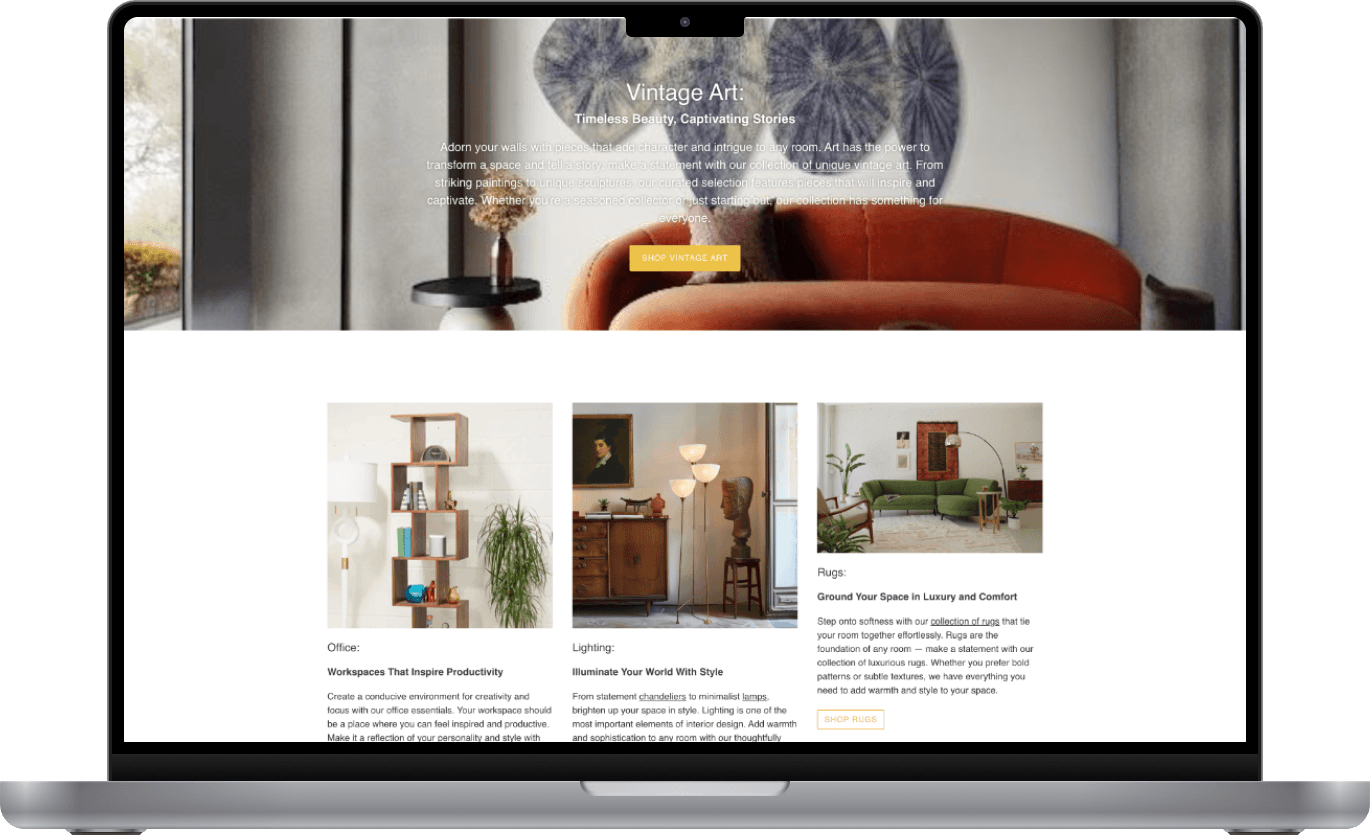
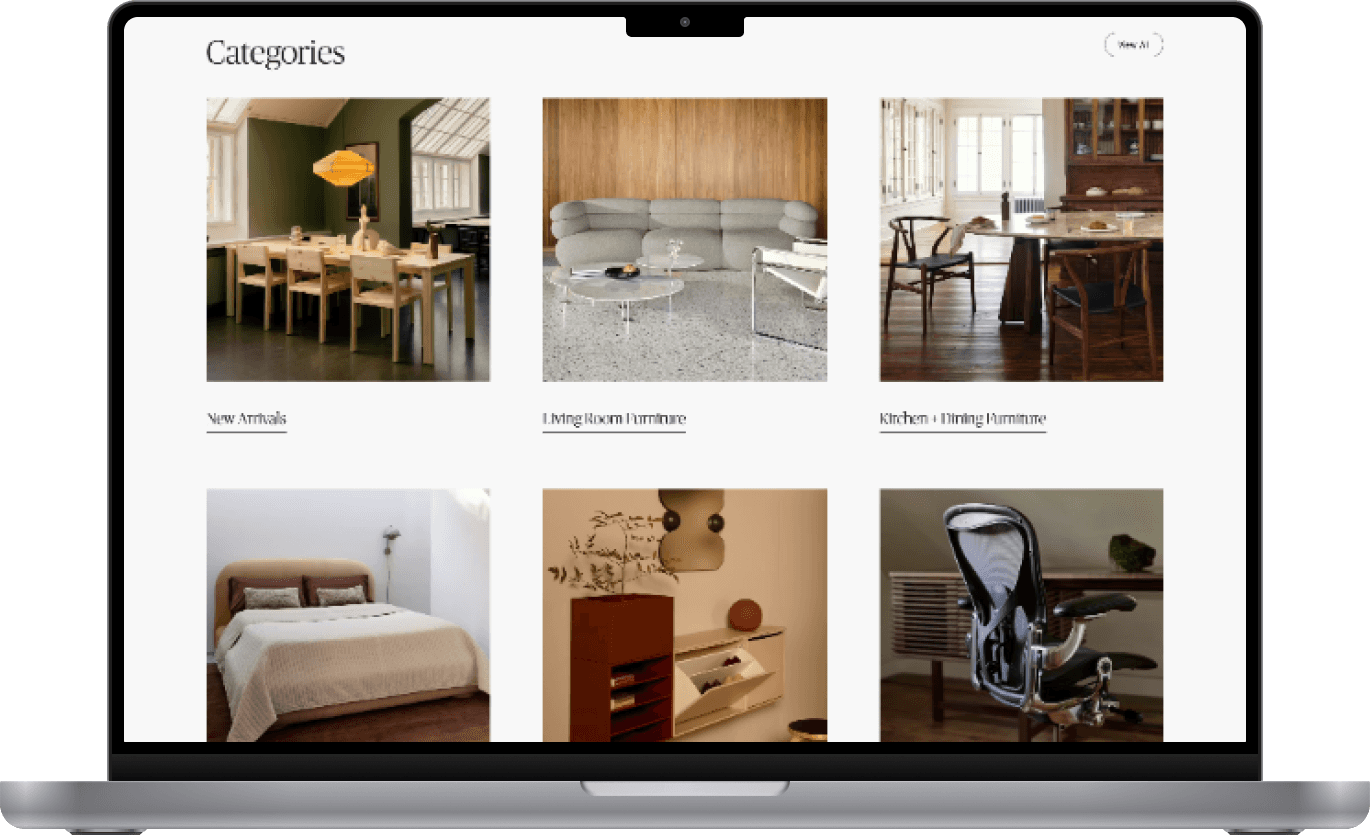
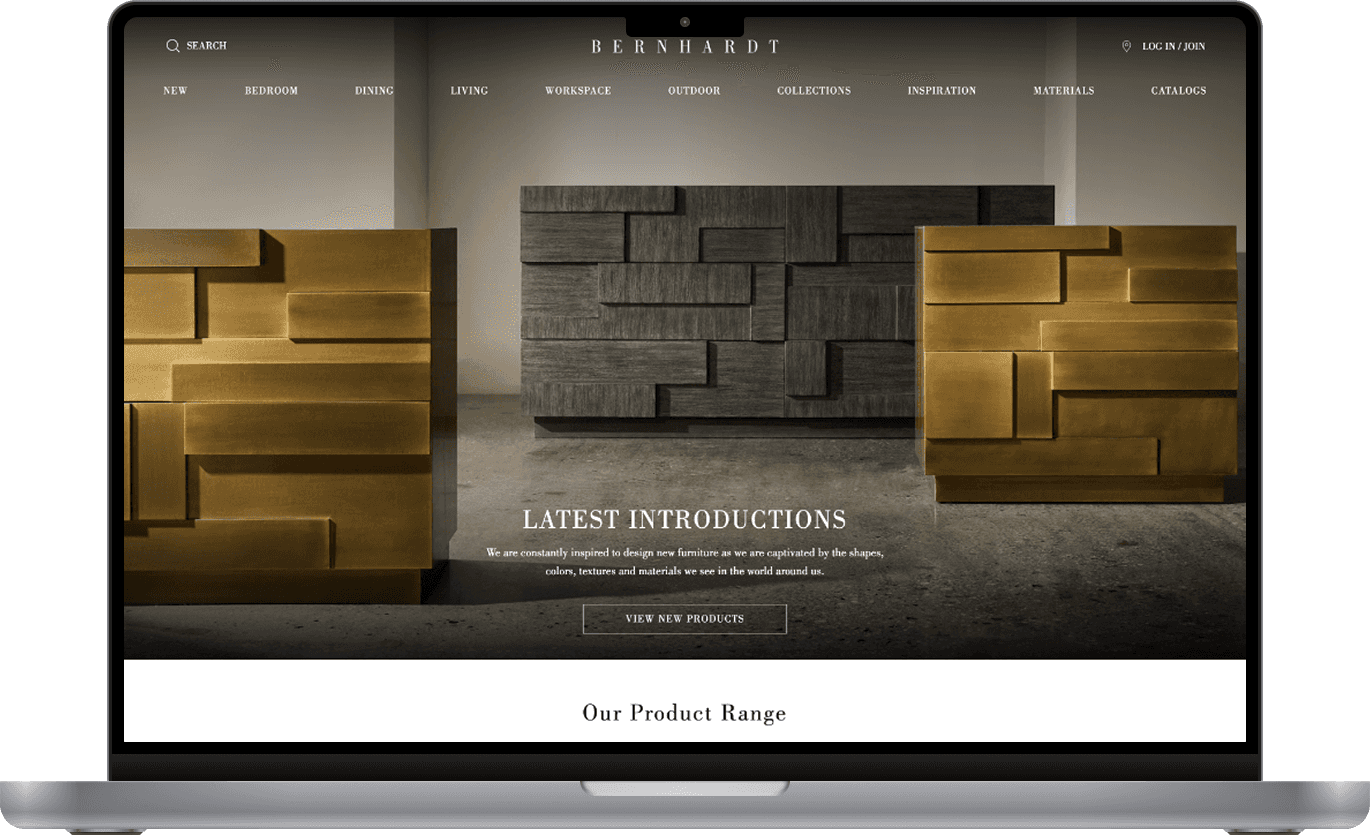
Across these competitors, clear patterns emerged around how trust, discovery, and product confidence are established in furniture shopping experiences.
Key Observations
Large, high-quality imagery dramatically improves perceived quality and trust
Clear pricing or auction information reduces early friction
Broad navigation with progressive subcategories prevents menu overload
Advanced filters such as brand, designer, or room support confident browsing
Curated homepages with featured products drive inspiration and emotional engagement
004
Synthesis & Key Insights
Synthesis & Key Insights
Research findings were synthesized to identify shared patterns and inform both user definition and experience structure.
Affinity Mapping
Interview insights were organized into an affinity map to surface recurring motivations, concerns, and behaviors.
Interview findings were placed on "Sticky Notes" in figjam.
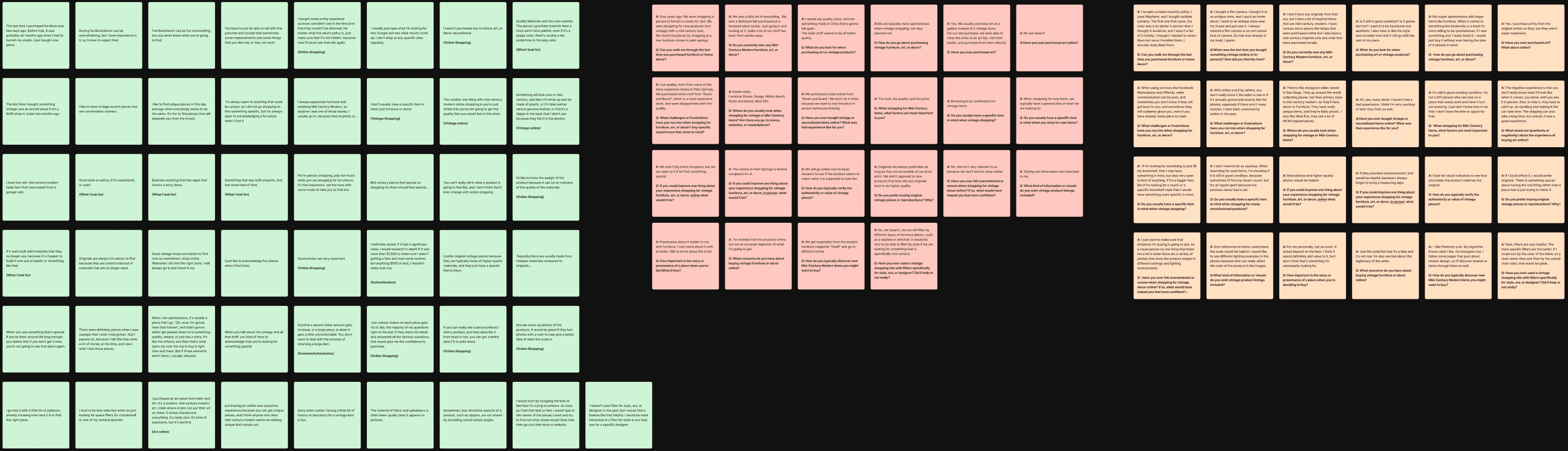
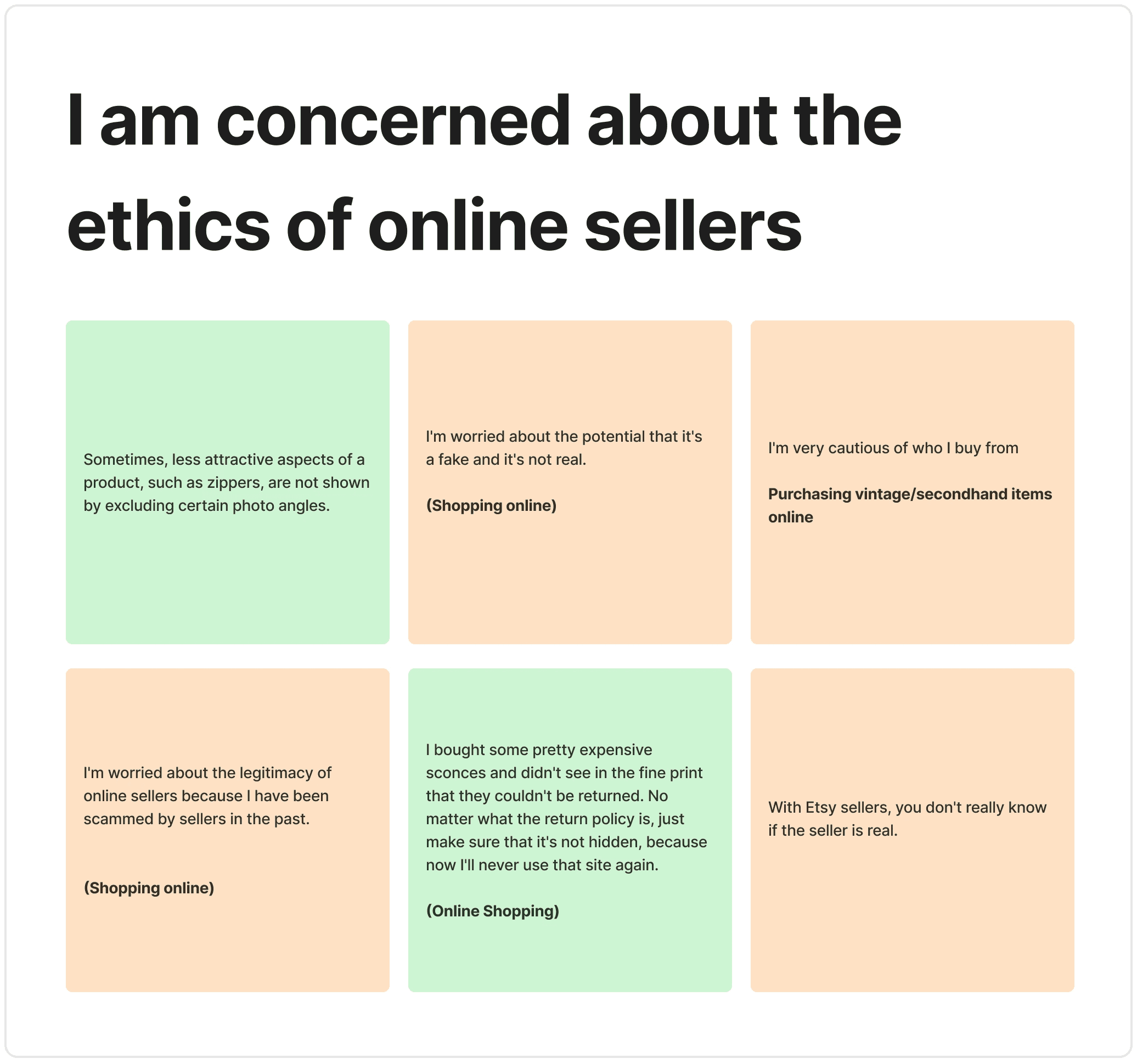
"Sticky Notes" are sorted into "I statements" and placed in frames.
This helps to identify shared experiences across interview participants.
Frames were sorted into 3 Categories.
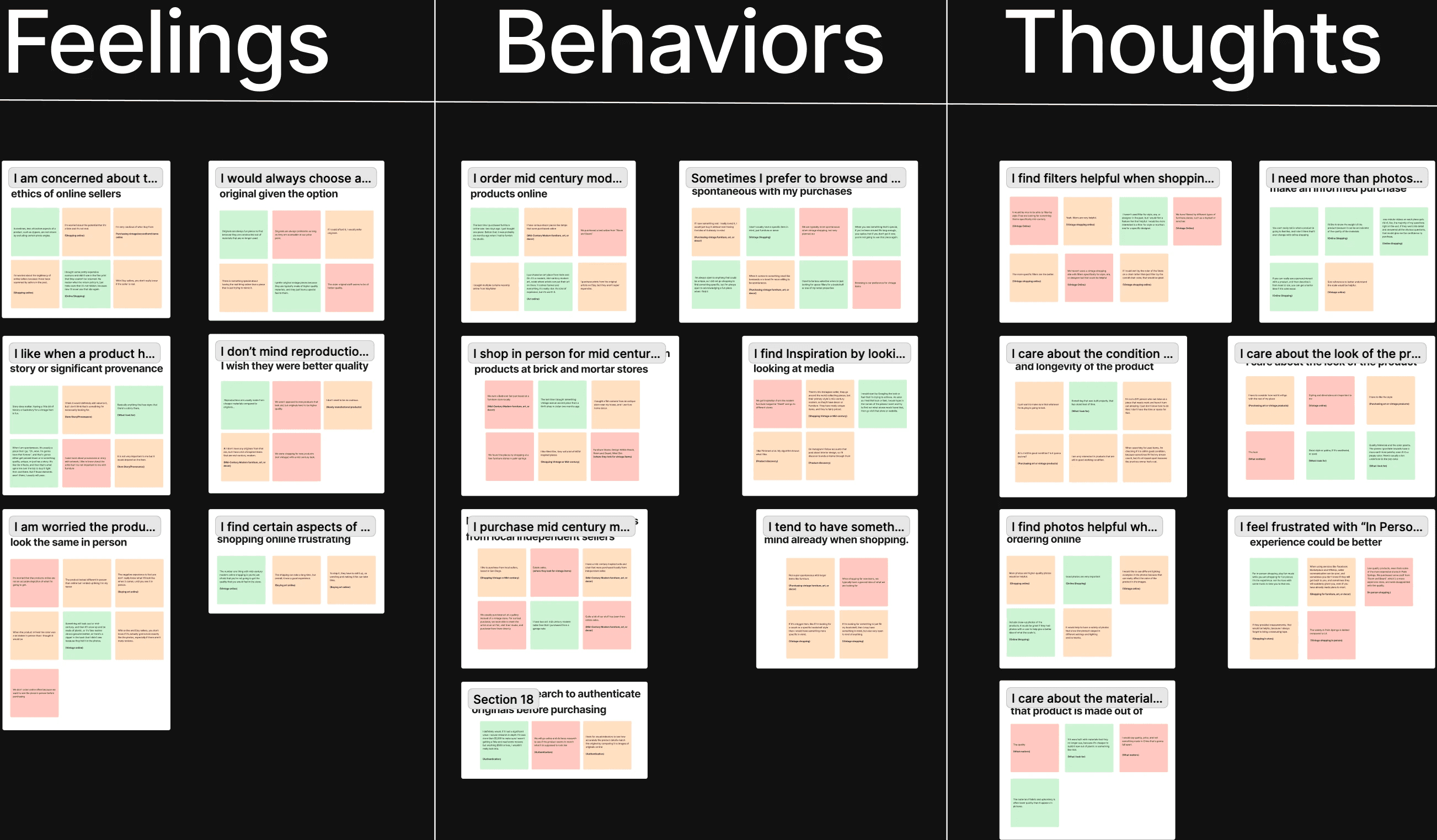
Feelings, Behaviors, and Thoughts.
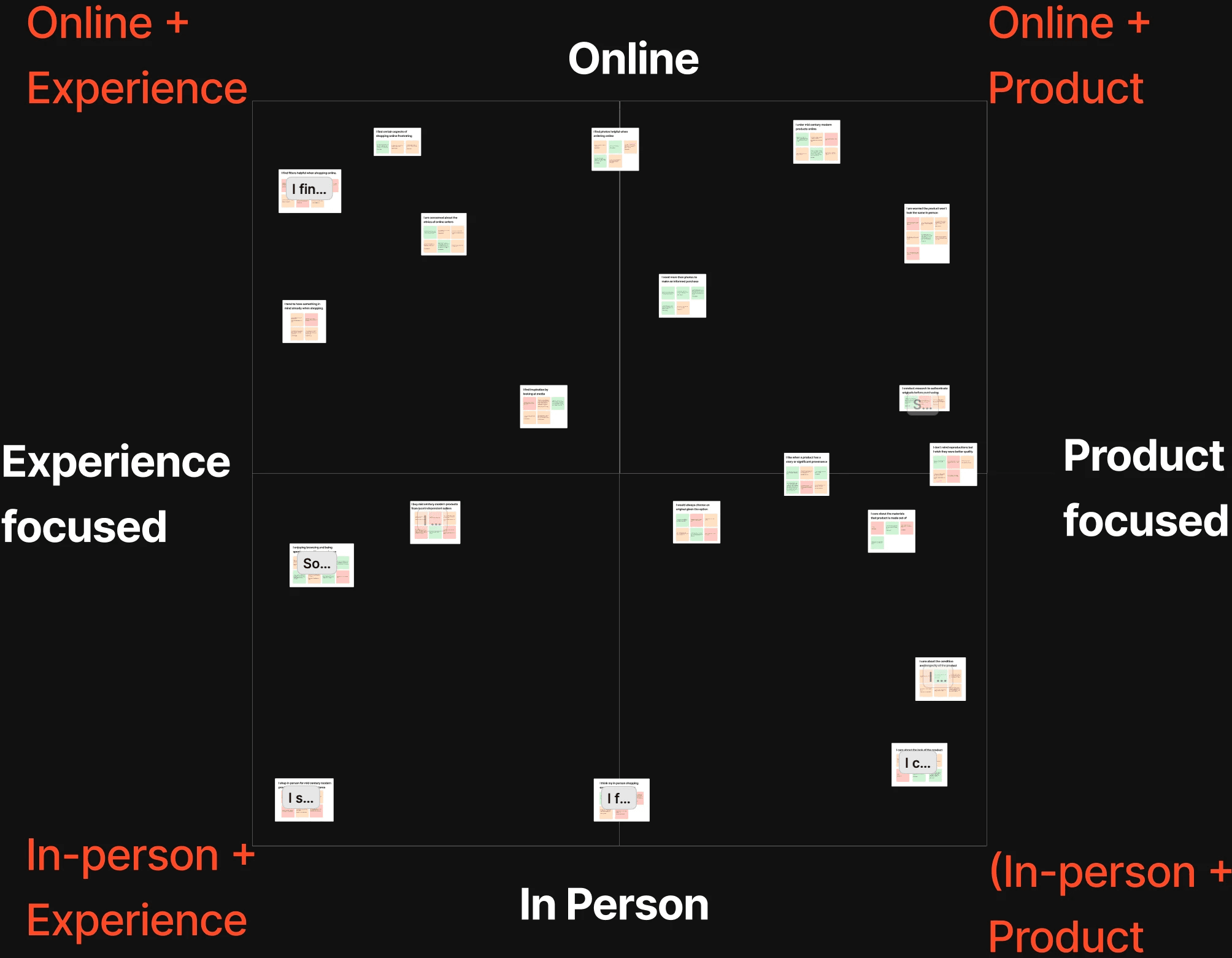
Frames were then further sorted into 4 quadrants to further identify trends.
Online, In Person, Experience Focused, and Product Focused.
Key Insights Identified
Users need more than photos to feel confident purchasing furniture online
Authenticity, materials, and condition strongly influence decisions
Provenance and story increase emotional connection to pieces
Online shopping often feels flat compared to in-person browsing
Structure helps evaluation, but inspiration still plays a key role
Understanding the User
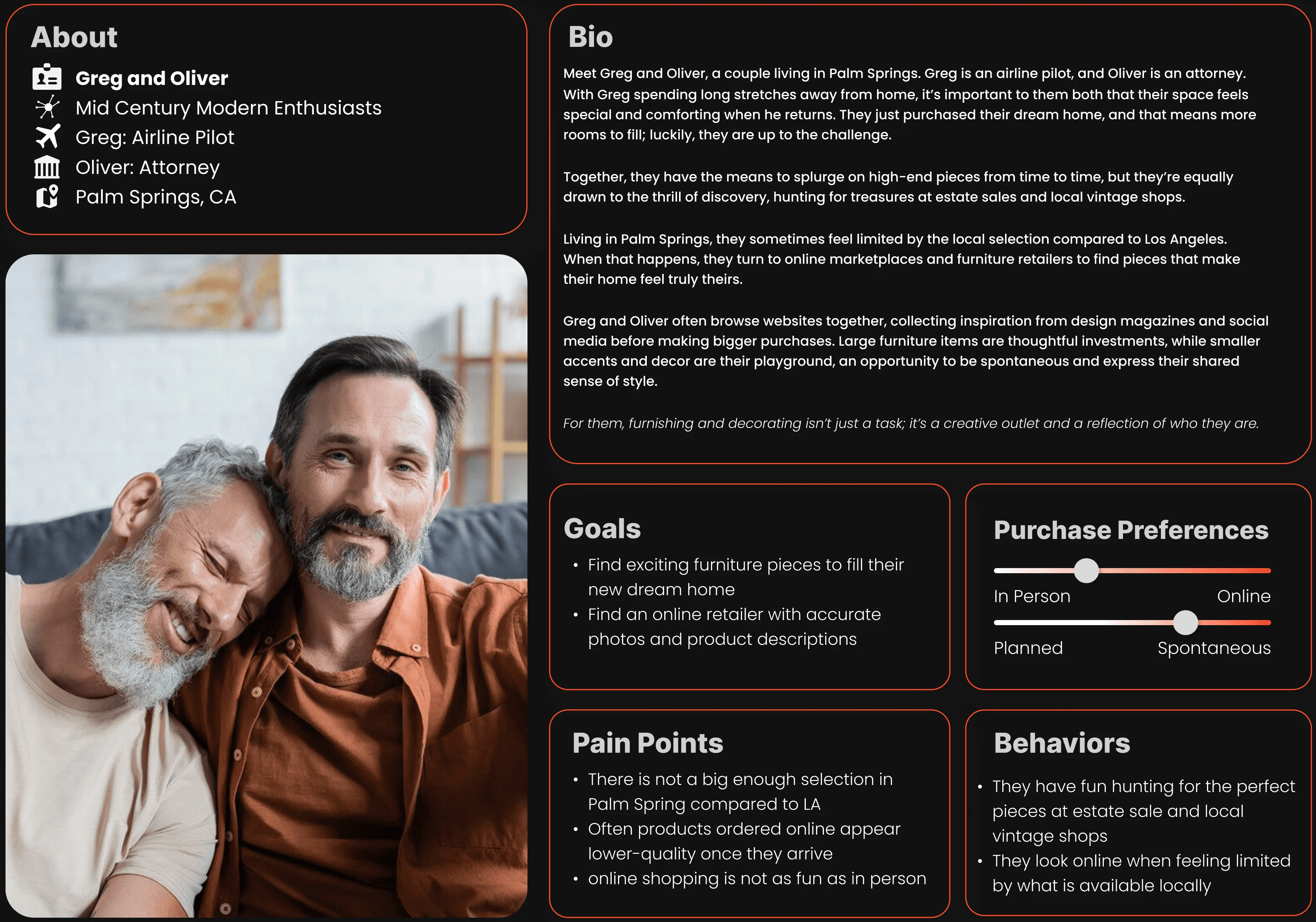
Insights from research and synthesis informed the creation of a primary persona representing Ventura’s core audience.
Persona: Greg and Oliver
Problem Satement
"Vintage furniture shoppers want to purchase unique pieces online with confidence, but current marketplaces make it difficult to assess quality, condition, and authenticity. Without the tactile reassurance and storytelling of in-person browsing, users hesitate to commit and lose the sense of excitement that defines vintage shopping."
005
Structuring the Experience
Structuring the Experience
With user needs clearly defined, I focused on organizing information and shaping how users move through the platform.
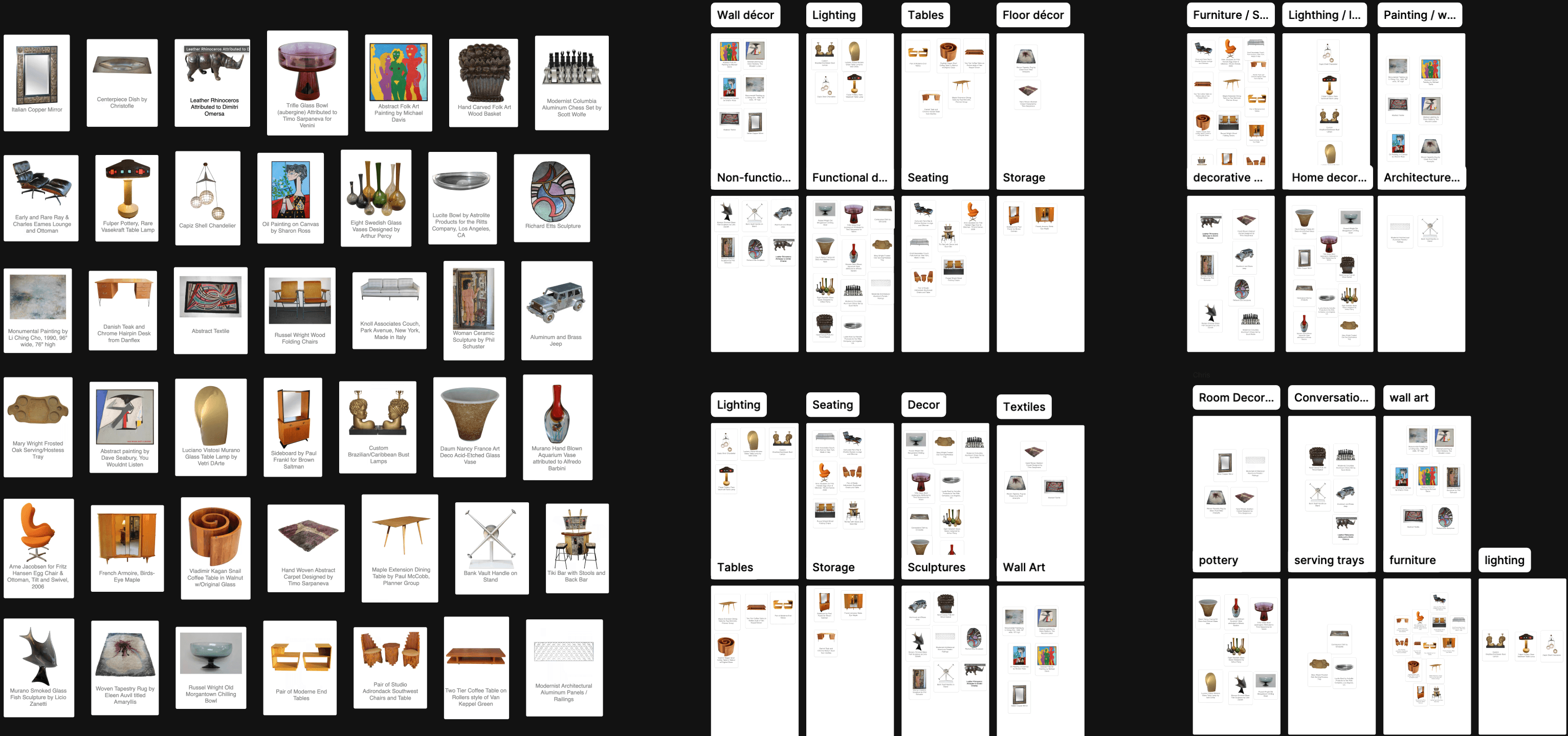
Card Sort
I conducted a card sort to understand how users naturally group product information and what labels feel most intuitive when evaluating furniture.
Sitemap
Insights from the card sort informed the sitemap, defining page hierarchy and navigation priorities.
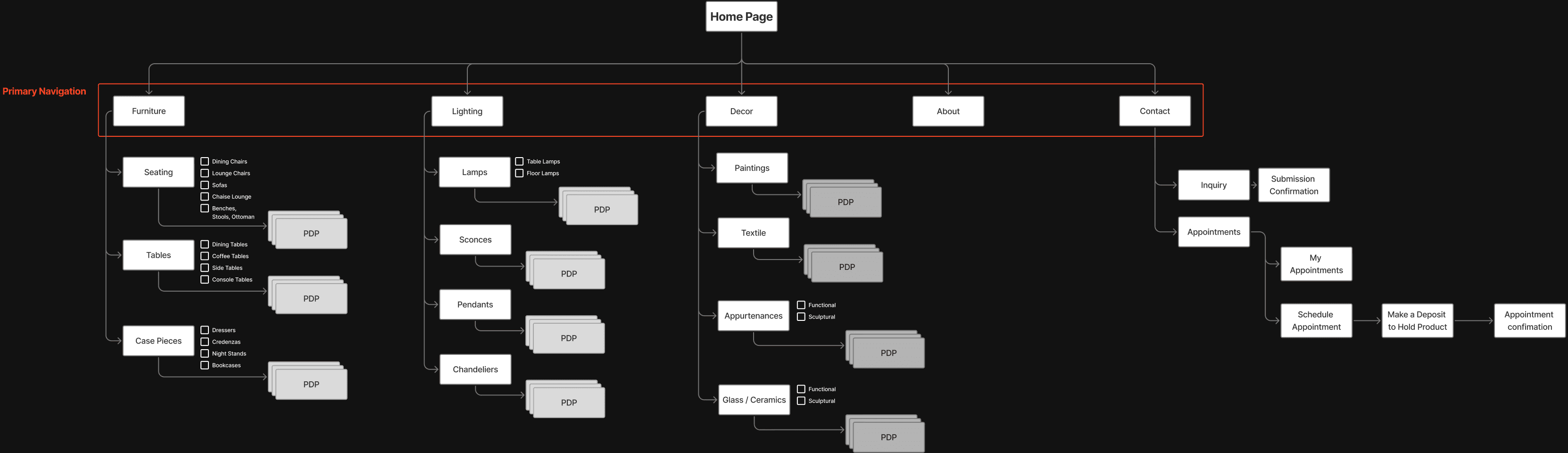
Task Flows
I mapped key task flows to visualize how users move from discovery to evaluation to purchase, ensuring trust-building information appears at the right moments.

006
The Design Process
The Design Process
With structure in place, I moved into an iterative design process focused on clarity, confidence, and inspiration.
This is where we start creating solutions to our client's problems
From Sketch to Structure
Early sketches explored layouts, content groupings, and interaction ideas without visual constraints. This allowed rapid exploration before committing to wireframes.
Sketches: Defining the Core Experiences
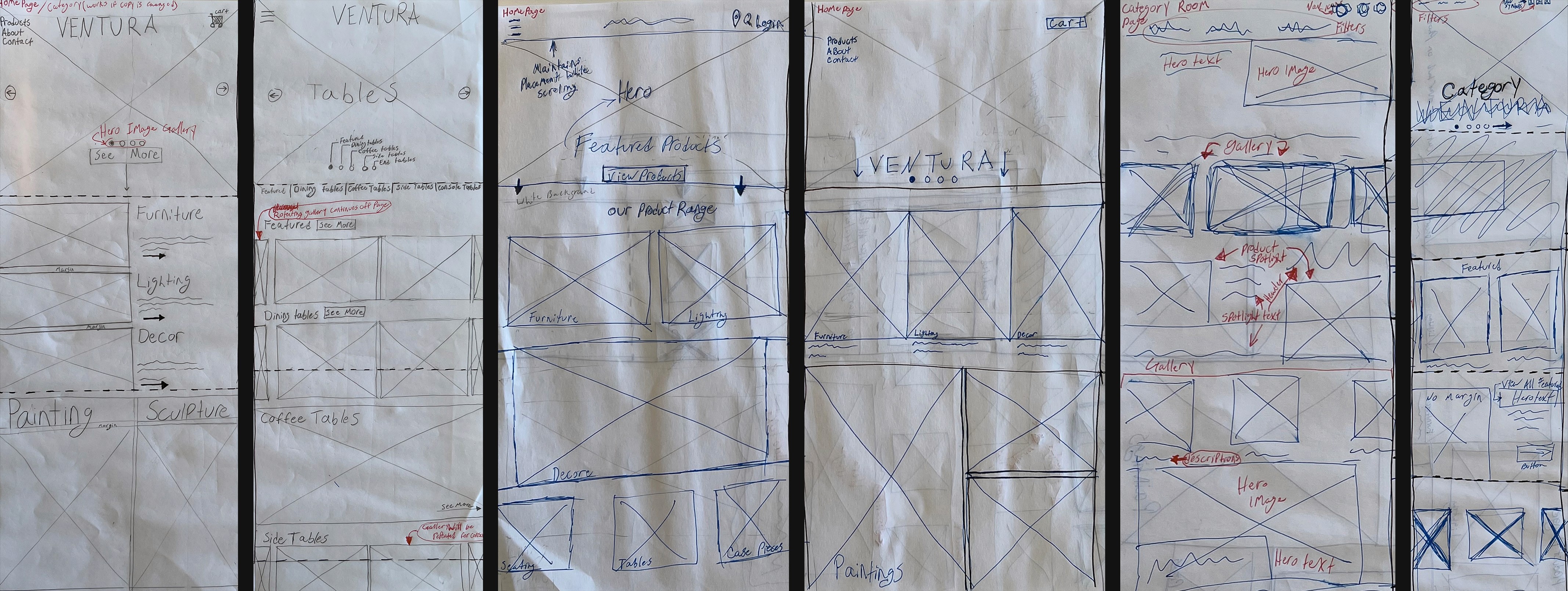
User experience sketches exploring learning, progress, and engagement flows
Wireframing
Low-fidelity wireframes were created to formalize information hierarchy, navigation, and core user flows.
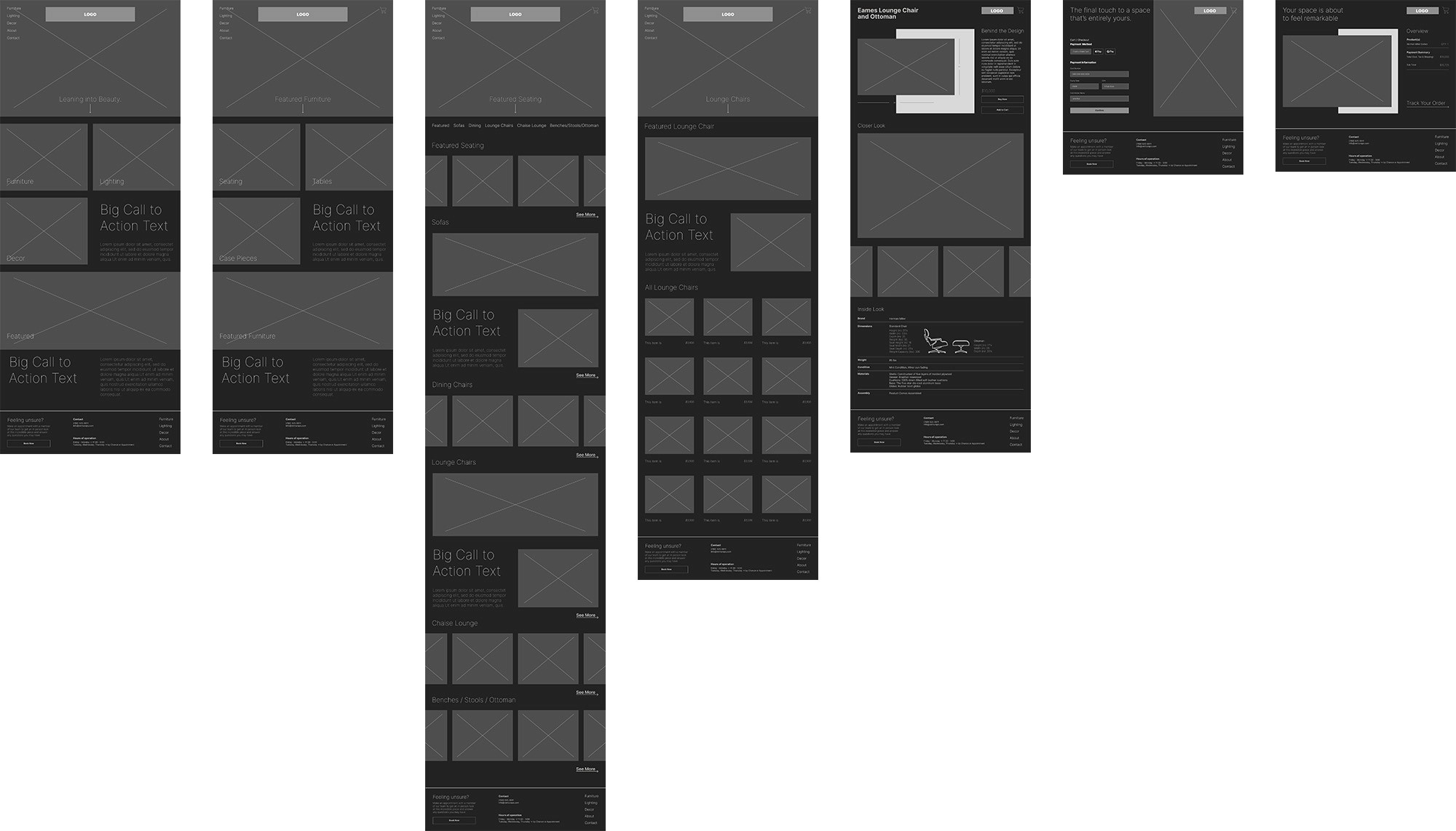
004
Research → Screen
Research → Screen Example
To demonstrate how insights translated into design decisions, I focused on a key screen.
Insight → Decision → Results
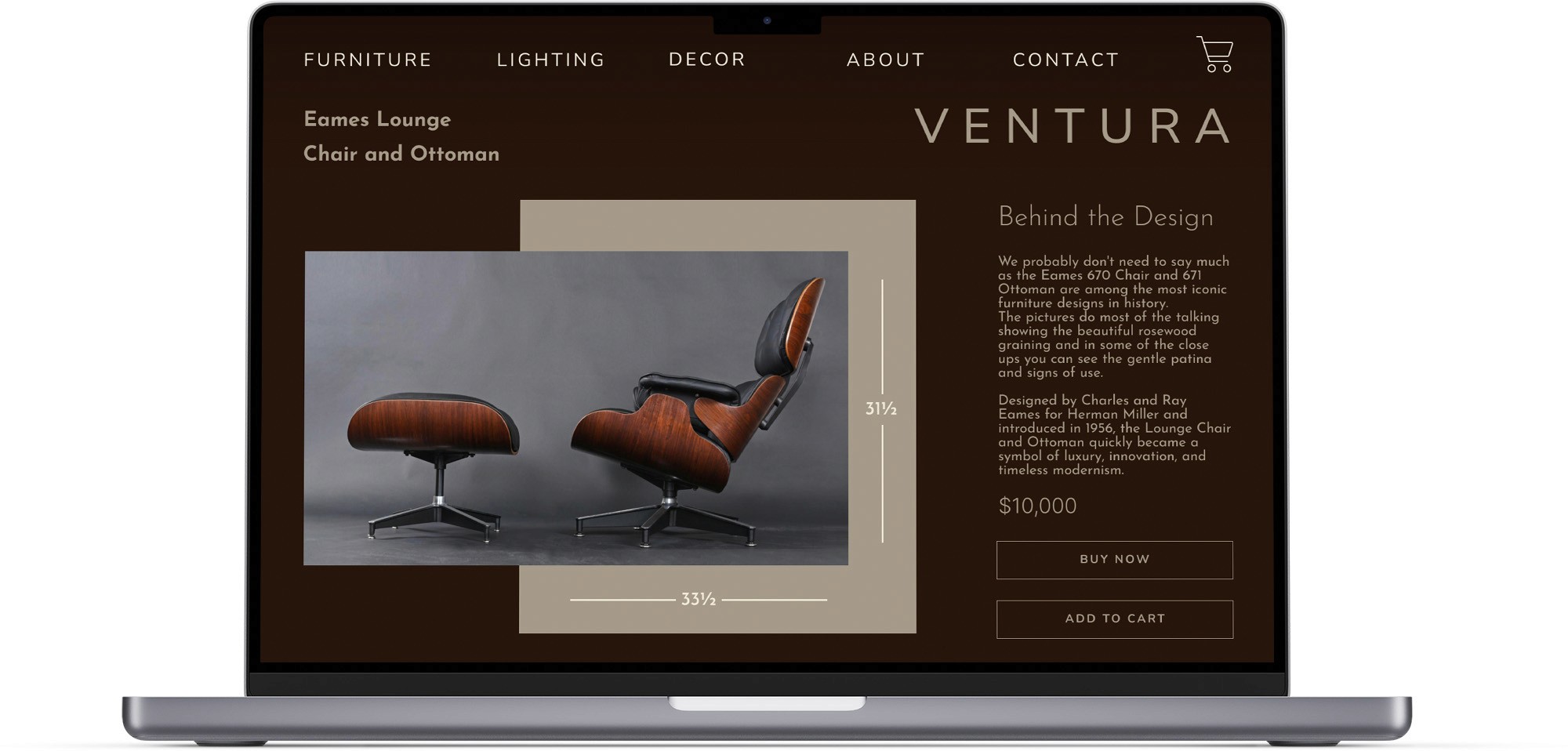
Screen: Product Details Page
Insight
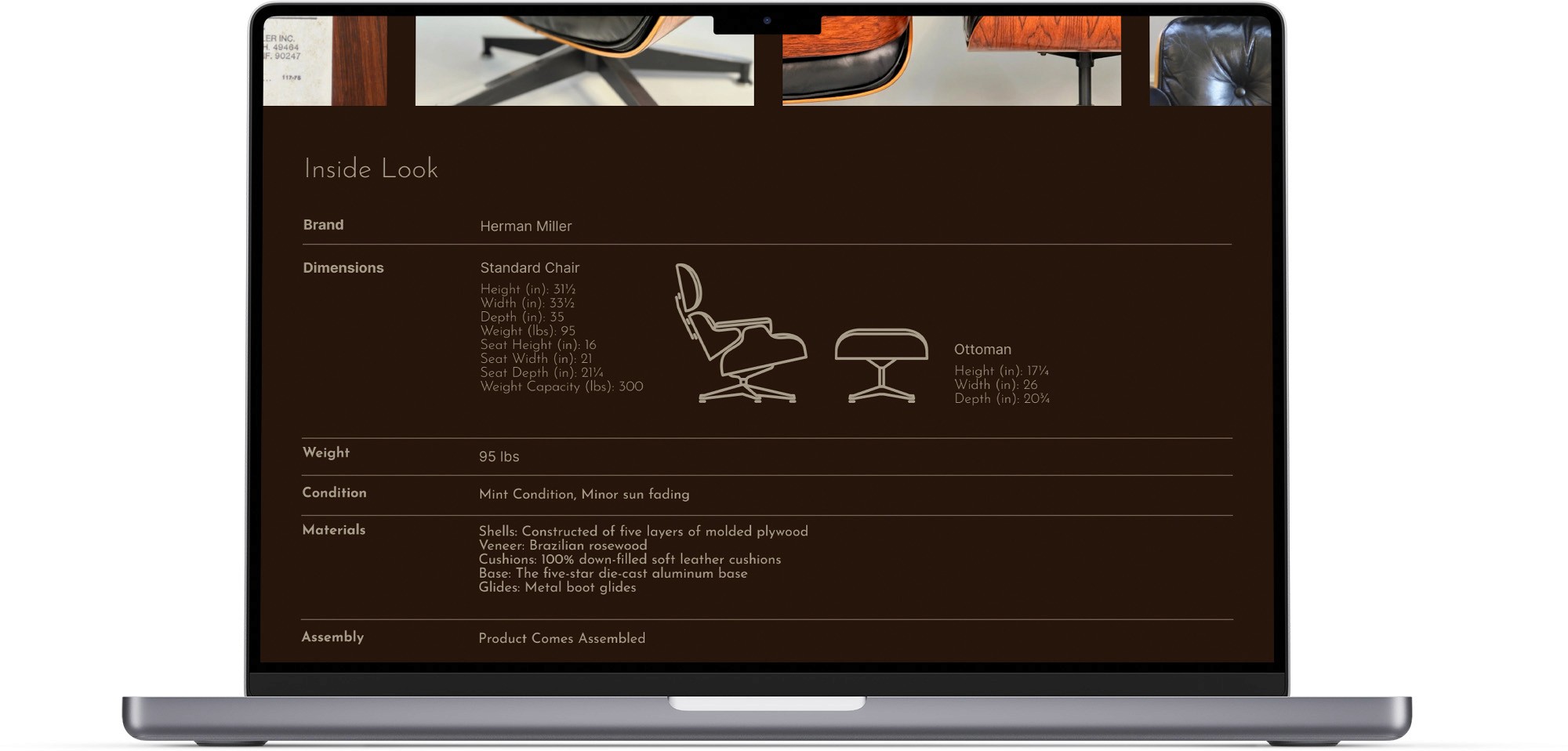
Users want specific, detailed information to feel confident about what they are purchasing.
Decision
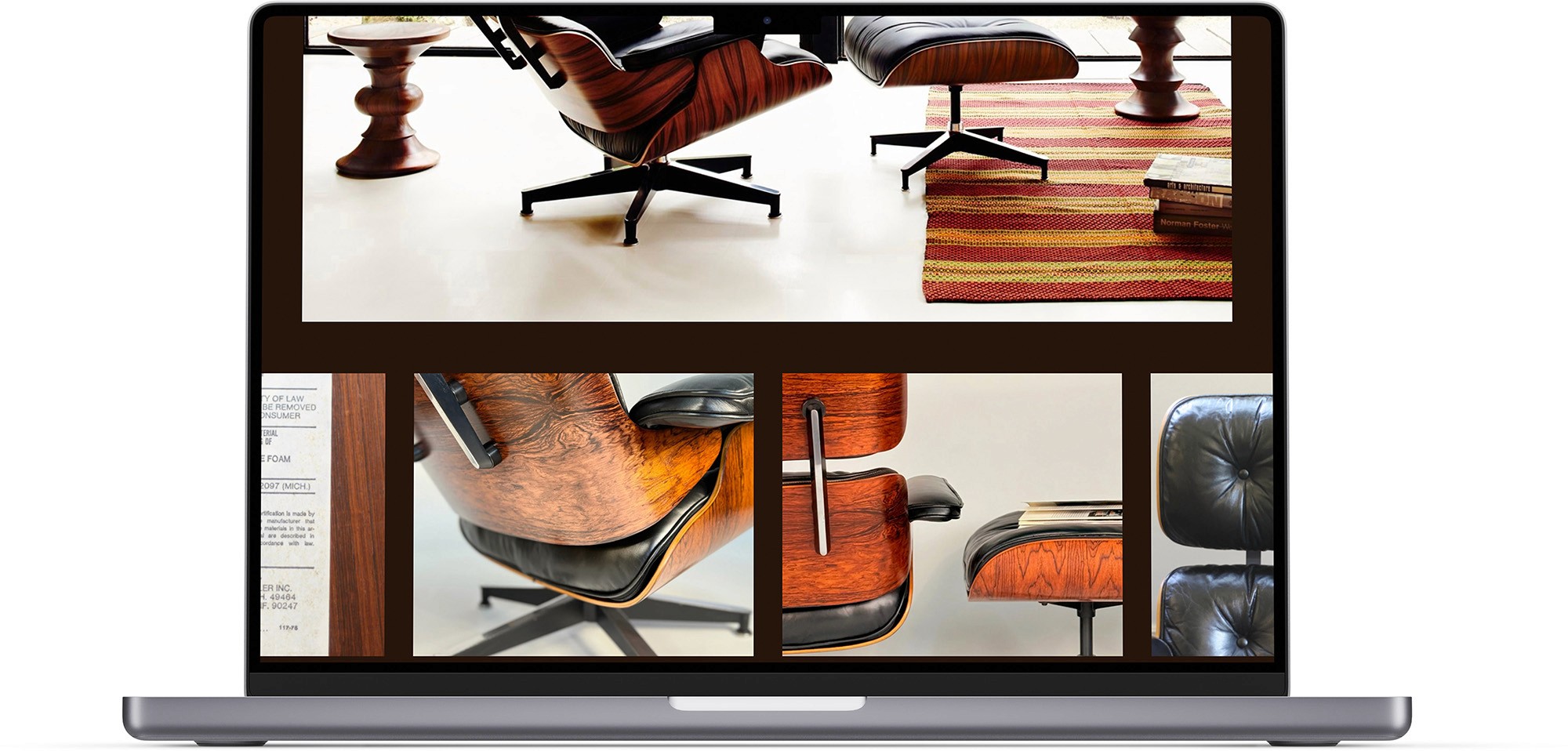
The product detail page prioritizes materials, dimensions, condition, and weight alongside provenance and story to help users connect emotionally before purchasing.
Result
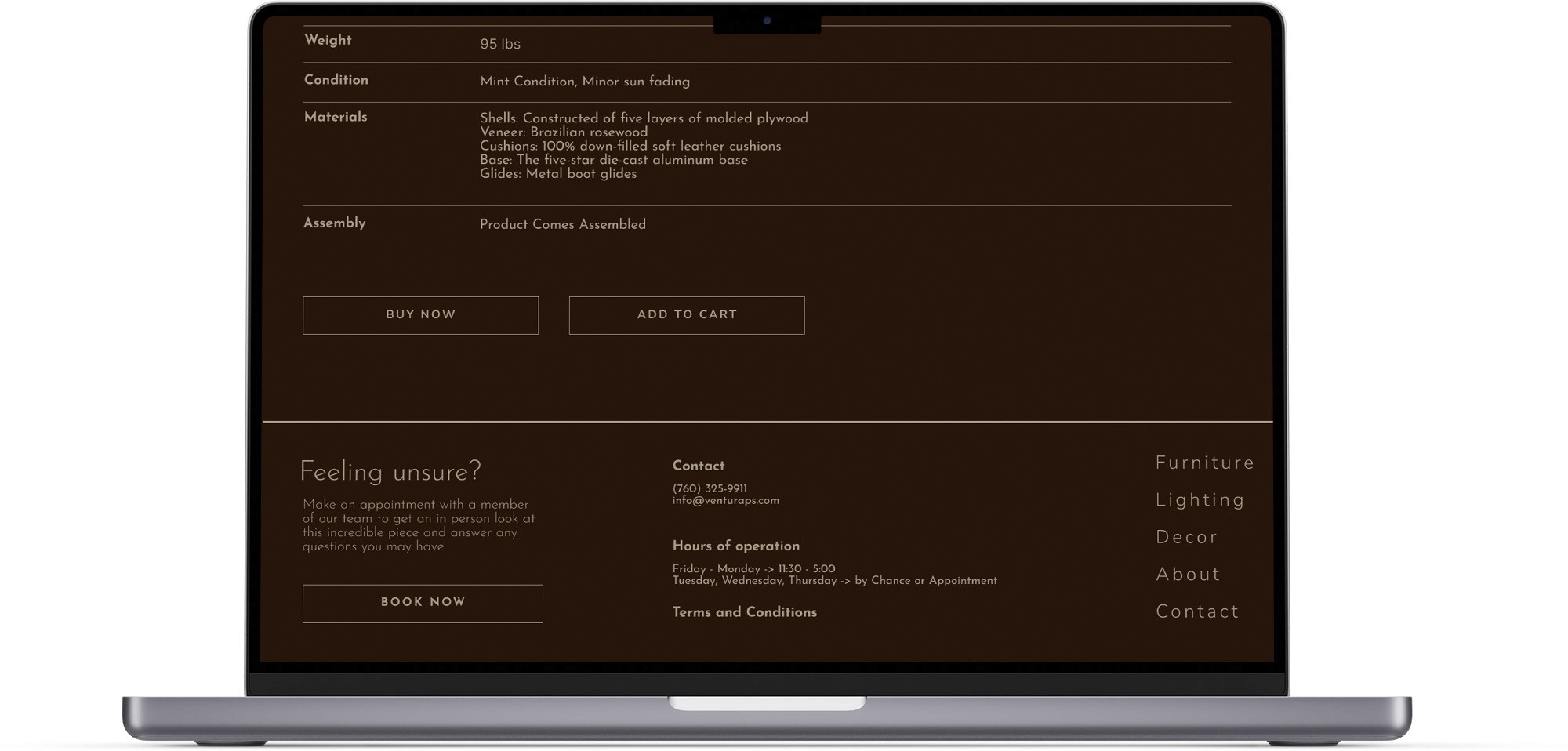
The final product detail page supports confident decision-making while preserving a sense of discovery through rich imagery and thoughtful content.
004
Usability Testing & Iteration
Usability Testing & Iteration
To validate early design decisions and identify areas for improvement, I conducted usability testing on both low-fidelity wireframes and high-fidelity designs.
Focus:
Testing focused on whether users could easily browse products, evaluate details, and understand key actions such as purchasing and checkout.
Wireframe Testing Takeaways
Testing early wireframes surfaced several opportunities to improve clarity, hierarchy, and user confidence before moving into high-fidelity design.
Navigation & Discoverability
Users wanted clearer indicators that certain elements were interactive, particularly subcategory navigation.
The seating link was unclear and required refinement.
Adding a “See more” button beneath featured lounge chairs helped users understand that additional products were available.
Layout & Hierarchy
Increasing spacing between sections improved scannability and reduced visual crowding.
Some users did not immediately realize they could scroll on the product detail page, indicating a need for stronger visual cues.
Product Evaluation & Purchase Confidence
Users requested more information about the product they were purchasing, reinforcing the importance of detailed specifications and context.
Adding shipping information earlier in the checkout flow helped reduce uncertainty.
A second “Buy it now” button placed below product details improved clarity around the primary action.
It was unclear to some users whether a purchase was successful when reaching the confirmation page, leading to the addition of clearer confirmation messaging such as “Thanks for your purchase.”
High-Fidelity Testing Takeaways
Testing high-fidelity designs helped validate visual direction while identifying areas for refinement.
What Worked Well
Users responded positively to the overall aesthetic, particularly the dark mode treatment.
The updated top navigation in the hi-fi design was found to be more intuitive and easier to navigate.
The furniture listing layout and footer were well received.
Users appreciated the “Inside Look” section and the inclusion of detailed measurements, reinforcing confidence in product evaluation.
Opportunities for Refinement
One lounge chair image had contrast that felt too strong and required adjustment.
The “Decor” label in the header needed alignment fixes.
Some copy set in an ultra-light font weight was difficult to read and was adjusted for better accessibility and legibility.
Impact of Testing
Usability testing helped catch friction points early, validate key design decisions, and ensure the final experience felt both intuitive and trustworthy. Incorporating this feedback strengthened navigation clarity, improved purchase confidence, and refined visual accessibility across the experience.
004
Hi-Fi Design & Visual Direction
Hi-Fi Design & Visual Direction
High-fidelity screens were designed to balance clarity with warmth, ensuring the experience feels curated rather than transactional.
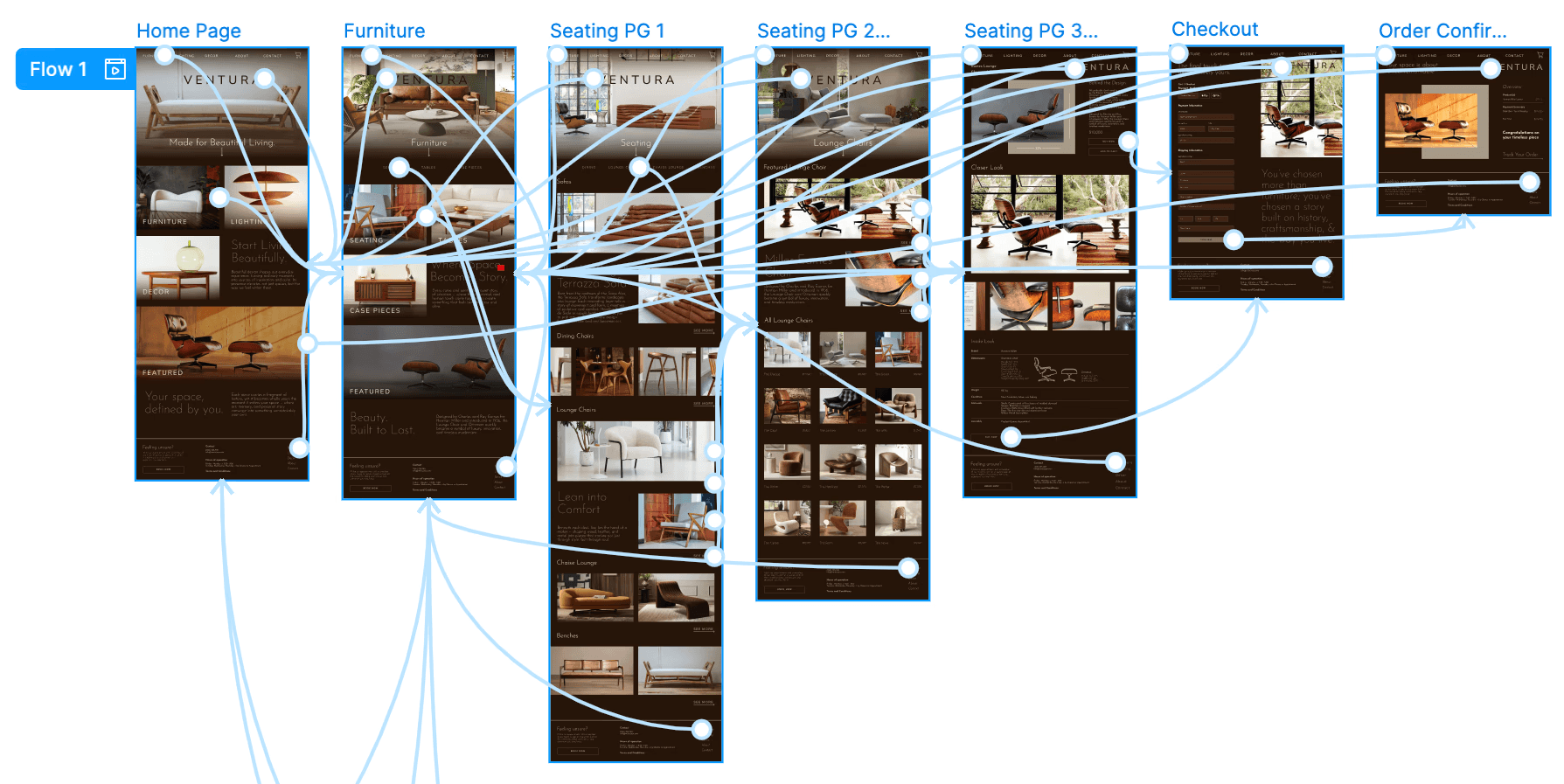
Hi-Fi Protoype:
Created polished, interactive prototypes with full visual design, incorporating insights gained from usability testing.
Prototyping:
004
Constraints & Scope
Constraints & Scope
This project was completed within a focused 3-week sprint.
Time Constraints
The limited timeline required prioritizing core flows over edge cases.
Scope Limitations
The project focused on browsing, product detail pages, and checkout rather than full account management or post-purchase features.
Academic Context
These constraints supported clear prioritization of the most impactful user journeys.
004
Hi-Fi Design & Visual Direction
Impact & Takeaways
Ventura demonstrates how thoughtful UX can restore trust and emotion to online vintage shopping.
Outcomes
Increased confidence through detailed product information
Stronger emotional connection via provenance and storytelling
A browsing experience that feels inspiring rather than overwhelming
Reflections
This project reinforced that for emotionally driven purchases, trust and storytelling are just as critical as clarity and structure.